Tuesday, September 3, 2013

Philadelphia Museum Begins Its Fifth Season of Jazz Concerts

Art is not always something you hang on the wall, and Philadelphia’s Woodmere Art Museum is leading the way by offering Friday evening jazz concerts to its members and the public. The museum that tells the story of Philadelphia art and artists is also presenting its rich musical heritage and contemporary sounds featuring many of the very best jazz musicians of the Delaware Valley.

Since April 2009, Woodmere has presented
a Friday evening jazz series to an appreciative and ever growing audience.  Working with Warren Oree, a bassist, composer, educator, and producer, who heads Life Line Music Coalition
and his own group the Arpeggio Jazz Ensemble, Woodmere has now become recognized as an important city jazz venue.  Jazz at Woodmere features many of the area’s top jazz musicians.

The 2013 Fall jazz series begins on Friday October 4 with a tribune to singer Tina Turner,  titled What’s Love Got to Do With?  Philadelphia’s Lisa Chavous pays homage to one of the great female soul singers performing some of Tina’s most popular tunes. On October 11, the theme is La Vie En Rose – Edith Piaf, Better Than French Wine.  Vocalist Phyllis Chapelle brings the first lady of French song alive.

A Night at the Apollo Theater, Harlem, NYC, 1938  is the theme on October 18.  The Arpeggio Jazz Ensemble will perform sounds of Fats Waller, Duke Ellington, Coleman Hawkins, Count Basie, Sidney Bechet, and more.  On October 25, its “Mr. Magic,” a tribute to Grover Washington, Jr. An innovator and a saxophonist of the first order. His music was a bridge connecting jazz and smooth R&B. The popular group Hidden Treasure performs.

Jazzy Divas: The Sound That Touches the Soul,
is the theme on November 1. Jazz divas made an indelible mark on the music. Now current day divas as Michelle Beckham, Sherry Butler, Tonya Lynette, Pat Washington, Lauren Lark, and Jackie Joyner perform with the Arpeggio Jazz Quartet. Arpeggio returns  November 8 with Smoother Than Silk: The Nat King Cole Trio. Songs will include: Sweet Lorraine, I Love You, Paper Moon, and Smile.

Four young men from Liverpool, England made some unforgettable music.  The Arpeggio Jazz Ensemble presents a jazzy styling of The Beatles on November 15.  On November 22, the incredible jazz guitars of Wes Montgomery and George Benson are recalled and on December 6, jazz vocalist Tonya Lynette pays tribute to lyricist Johnny Mercer.

The Fall series concludes on December 13 with a salute to Southern Soul and Stax Records.
Vocalists Roy Richardson, Pat Scott, and Tonya Lynette will perform many of the best Stax recordings.  Details regarding the jazz series can be found on the museum’s website at woodmereartmuseum.org. Plan to attend and enjoy.


James C. Weaver

Email: jweaver35@comcast.net
Senior Travel Writer
Golf Wiz Blog

Wednesday, May 22, 2013

Sergio Garcia and His Comments about Tiger Woods


                As the Senior Editor of the African American Golfers Digest and as an African American male in the United States of America I am appalled and extremely offended by the recent remarks made by professional golfer Sergio Garcia.  Garcia made these remarks in response to a question posed to him concerning Tiger Woods and their much publicized verbal battle in the media after the 2013 Players Championship.

                His comments were not only inappropriate, and hurtful they were racist and insensitive.  In this day and age comments of this nature have no place in society and certainly not in the game of golf.  Sergio’s remarks are reminiscent of similar remarks made by professional golfer Fuzzy Zoeller after Tiger’s win at the 1997 Masters Tournament. Moeller’s remarks were wrong and hurtful then and sixteen years later the racial tone associated to Sergio Garcia’s remarks are just as inappropriate.  Comments of this nature dredge up thoughts of a sad and disgraceful period in this country’s history not only to African American’s but to people of all races and walks of life.

                I am sure that Sergio Garcia and his team will draft a response to his actions and work diligently to address this issue in a timely manner. However, Garcia will not a get a pass from me.  Regardless of how off the cuff or stupid his comments were they point to his mindset and to a racist belief system that he possesses. It is clear that Tiger Woods and Sergio Garcia have always had a tenuous relationship at best both on and off the golf course, but the comments uttered by Sergio Garcia clearly cross the line of basic decorum and decency.
                I call on Sergio Garcia and his sponsors to take immediate and appropriate action to rectify his actions. A failure to issue a sincere and meaningful apology will only cause this regretful situation to get worse. The fact that Sergio Garcia isn’t willing to admit to the racist overtones of his comments only goes to show his lack of concern and sensitivity about the struggles, challenges and painful history of the African American experience.  

Sergio Garcia’s press conference this morning did very little to change my mind or my views on this sad and unfortunate situation. I urge both Taylormade Golf, Adidas Golf and Sergio Garcia’s other sponsors  to address this issue immediately and make sure that the players who represent their brands don’t possess such racist and insensitive mindsets and attitudes.  

Edward Wanambwa
            GolfWiz Blog
#golf_writer  

Tuesday, May 21, 2013

Clinton Presidential Center Offers Insight Into The Life of Our 42nd President


There are fourteen Presidential Libraries.So far, I’ve visited five: Johnson, H.W.Bush, Carter, Ford, and most recently Clinton. They are alike in many ways, chronicling the lives of a U.S. President, but they also reveal much about the times when each man held the office and the history of our nation and its people. Each one, in its own way, tells us who we are as Americans.  
 
Located in a beautiful 32 acre park on the southern banks of the Arkansas River in the state capital Little Rock, the Clinton Presidential Center is a contemporary designed two story building.  Its a Platinum LEEDS rated building, the only one in Arkansas, meeting the highest standards for environmentally friendly construction and operations. 
 
Along with its large exhibit halls, there are full size replicas of the White House Cabinet Room and the President’s Oval Office as they were during the Clinton years.  The archival and library holdings are the largest of all the Presidential Libraries with approximately 76.8 million pages of paper documents, 1.85 million
photographs,  and over 75,000 museum artifacts. There is also a rooftop apartment provided for the Clintons when they visit Little Rock.
 
A special exhibit honors “The Little Rock Nine” a group of nine black students who courageously integrated Little Rock Central High School in 1957.  
 
Opened in 2004, the Center is home to the William J. Clinton Presidential Library and Museum, the University of Arkansas Clinton School of Public Service, and the Little Rock offices of the Clinton Foundation.
 
The Foundation works to improve global health, strengthen economies, promote health and wellness, and protect the environment by fostering partnerships among businesses, governments, non-governmental organizations, and private citizens. 
 
The University of Arkansas Clinton School of Public Service is the first graduate school in the nation to offer a Master of Public Service degree. It emphasizes real-life application where students gain the knowledge and experience to further their careers as leaders in the areas of nonprofit, governmental, volunteer, or private sector work.
 
The Clinton Presidential Center attracts hundreds of thousands of visitors from around the nation and world each year and plays an active role in the Little Rock community, hosting a number of events, lectures, and conferences throughout the year. It has been instrumental in bringing more than $2.5 billion in economic development to the area.
 
“Forty Two” (named for the 42nd President), is the Center’s popular restaurant open Monday through Saturday for lunch and afternoon snacks.  It also serves a exquisite Sunday Brunch.  The Clinton Museum Store is located
in a separate building adjacent to the Center.
 
While many museum in Little Rock offer free admission, The Clinton Presidential Center
has a small admission fee. It is open daily except major holidays. The internet offers considerable information about the Center and other attractions in the Little Rock area.


 James Weaver 
Senior Travel Writer
GolfWiz Blog 


Tuesday, April 2, 2013

U.S. Open Returns to Merion for the Fifth Time.


The Merion Golf Club in Ardmore, Pennsylvania, near Philadelphia, will host the 2013 U.S. Open Golf Championship June 13-16. It is the fifth Open to be held at Merion.
The most recent Open here in 1981 was won by Australian, David Graham. The event will mark the Centennial of the Marion Golf Club and a special exhibit “The Art of Golf” is being presented at the Philadelphia Museum of Art
in its honor from March 16 to July 7.
 
No golf club in the nation has hosted more USGA championships than Merion. The 2013 Open will be the 18th national championship at the club.  Previously, the club has also been the site of the 1916, ‘24, ‘30, ‘66, ‘89 and 2005 Amateurs; the 1904, ‘09, ‘26, and 1949 U.S. Women's Amateurs; the 1998 U.S. Girls' Junior and the 1960 World Amateur Team Championships.
 
Designed by Hugh Wilson, Merion Golf Club's East Course was opened in 1912. Its perhaps best known as the where Bobby Jones won the 1930 U.S. Amateur to complete the “Grand Slam.”  Hugh Wilson had never designed a golf course, so he went on a seven-month trip to Scotland and England to study British courses. Several features of Merion East are derived from famous British courses, not the least of which are Merion's distinctive Scottish-style bunkers, which are now known as the "white faces of Merion"
 
Wilson's layout covers only 126 acres of land, a very small area for a golf course. It was ranked seventh in Golf Digest's "America's 100 Greatest Golf Courses" in 2005, and Jack Nicklaus has said of Merion East, "Acre for acre, it may be the best test of golf in the world."
 
Bill Iredale, Merion's championship committee chairman stated, "we feel that our East Course is a very special venue, a classic golf course which, while lengthened some 400 yards to accommodate modern players and equipment, still retains the same shot angles, bunkering and greens that challenged Bob Jones in 1930, Ben Hogan in 1950, Lee Trevino and Jack Nicklaus in 1971 and David Graham in 1981."
 
Jim Hyler, chairman of the USGA championship committee said, "we are pleased to bring a U.S. Open back to an old friend in Merion. We have no doubt the East Course will provide a sufficient challenge for the world's best players."
 
“The Art of Golf,” an exhibition at the Philadelphia Museum of Art showcases “The Golfers,” a renowned seven-foot wide 1847 painting by Scottish painter Charles Lees that is admired by golfers worldwide.  The exhibition will feature portraits of golfers, a historic feather golf ball and antique Scottish clubs, and highlights the art and sport of golf in Victorian Britain.
 
An iconic painting, The Golfers (1847), by Scottish painter Charles Lees (1800–1880), is the centerpiece of The Art of Golf exhibition celebrating what has been called “a game of considerable passion” Modern golf’s roots can be traced to the east coast of Scotland, where kings and commoners have played the game since at least the fifteenth century. Lees’s monumental painting (7 foot.wide by 4.25 foot. high) shows  fifty-four spectators clustered tightly around a two-ball foursome match played on the links at St. Andrews. 


James Weaver
Senior Travel Writer
GolfWiz Blog
jimweaver35@comcast.net 


Tuesday, February 19, 2013

Rail Europe Is The Way To Travel For Americans Abroad


Its reasonable to say that most Americans have never ridden a train (discounting subways, amusement park rides, and antique railroad attractions).  Unless you live somewhere that has rail service, you probably don’t even think about trains. Cars and planes are how Americans get around.  In Europe, however, most people get where they need to go by train.
If you’re planning to visit Europe, you need to
seriously consider doing what the Europeans do.
 
Riding the train in Europe is simple, convenient,
comfortable and inexpensive.  Trains are clean, fast, and reliable (they arrive and depart on time).  In short, its the best way to get around.
My wife Barbara and I have visited Switzerland
four times and travel extensively throughout the country and in northern Italy by train.  We’ve also made five trips to Germany and travel by train throughout that country. 
 
Best of all, you can get your tickets or rail pass
before you leave home.  Simply visit the Rail Europe website.  It can help you reach thousands of European destinations in the most enjoyable comfortable way – by train. With it you can travel at high speed on its extensive network, which cover all major European cities and countries.
 
Rail Europe has  access to over 11,000 routes (25.000 destinations) served by the major European train operators.  Its so well connected it can help you reach your destination easily and enjoy it even more.
 
Some travelers enjoy getting to know more than one country and the Eurail Select Pass allows you to visit three, four or five bordering countries. The most popular countries visited with the Eurail Select Pass are France, Germany, Switzerland, Italy and Spain, which means you can see Paris, Berlin, Munich, Zurich, Geneva, Venice, Rome, Cannes, Barcelona and Madrid in one amazing trip.
 
You can push the boundaries with its Eurail Global Pass and travel around 24 countries on our network. Wherever you decide to go, it can help you with tips and guides about the destinations you choose, just take a look on its website for information to help you on your travels.
 
When you arrive at the international airport of any major European city, you’ll find a rail connection in the ternimal building.  Its an easy and convenient way to get to where you want to go. Its better than by rental car or taxi and less expensive.  Rail Europe can also book you a hotel and a city tour.  In short, its the best way to visit Europe. 
 
If you only speak and read American English,
you might be concerned, but fear not, service personnel on all the railroads speak your language and are friendly and helpful. Signs, too, are often in English as well as the local language.  The universal language of numbers -- Train #3456 (to your destination) departs at 10:00 AM on Track 8-- works very well.   
 
One of the best things about train travel in Europe is that you’re doing what people do here
and can experience another aspect of local culture that many American travelers miss.  Visit the Rail Europe website at and learn how easy it is.


 Jim Weaver
GolfWiz Blog
Senior Travel Editor
EmaiL; jweaver35@comcast.net

Grand Central Station Celebrates 100 Years


Manhattan's Grand Central Station Celebrates Its 100th Anniversary

Grand Central Station New York City, New York


                           Grand Central Station, one of the landmark buildings of New York City, is a century old this year.  More than 700.000 people pass through it each day with little or no thought of its history or importance, but it played a significant role in the city’s growth and expansion.  Railroads were a principle mode of transportation in the 19th Century and the early decades of the 20th moving both people and commerce enabling the growth of the city and nation.

                  New York’s first rail service was begun in 1831 and during the 1840s several additional lines were begun adding a variety of terminals, depots, freight houses, and passenger stations throughout the city. A haphazard network of railways resulted in noise, pollution, traffic, and chronic accidents. By 1858, steam locomotives were banned from much of the area and were no longer in service below 42nd Street. A new terminal was needed.  In 1869, shipping magnate "Commodore" Cornelius Vanderbilt purchased property between 42nd and 48th Streets, Lexington and Madison Avenue for construction of a new rail yard and the first Grand Central. It cost $6.4 million and opened in October 1871 serving three different railroad companies.  However, it was nearly obsolete from the beginning and had to be substantially enlarged in 1898.  The updated station featured a classical facade, a unified 16,000 square foot waiting room, and distinctive ornamentation including monumental cast-iron eagles with 13 foot wingspan.  Perhaps most significant was its 650 foot long train shed.


                              The age of steam locomotives (in the city) was quickly drawing to a closed and following a catastrophic accident in 1902 that killed 17 and injured 38 there was a public outcry for electric powered trains.  Within months plans were made to demolish the existing Grand Central Station and create a new double level terminal for electric trains.   This was an expensive project ($80 million or roughly $2 billion today).  It took ten years to complete and drastically changed the cityscape forever.  The former rail yards were paved over from 45th to 49th streets and developers paid the New York Central Railroad for “air rights” to build on top of the new tracks.  And build they did, including dozens of large apartment buildings, hotels, and corporate headquarters along Park Avenue and adjoining streets. The new Grand Central Terminal opened in 1913.  More than 150,000 people came to see it on the first day.
                                 Fast forward five decades to 1967 when the building was threatened with demolition (it had already happened to the city’s other railroad terminal Penn Station). A group of city leaders were successful in preserving the building an having it designated a national historic landmark in 1976.  Two years later it won a case before the U.S. Supreme Court sparing it from the wrecking ball.  


                                   After decades of deferred maintenance, the building was crumbling.  The roof leaked, stonework was chipping away, structural steel was rusted, pollution and dirt had stained surfaces, and commercial signs blocked out natural light  In 1883, Metro-North took over operation of Grand Central Terminal, and soon after the railroad began a systematic program of repairs and capital improvements, including a $4.5 million project to replace the leaking roof and skylights.  However, people soon realized that what was needed was a new terminal building.  In 1884, architects began working on plans and six years later construction started.


                                      Excavation was a huge job since the rail yard had to be lowered an average of 30 feet below street level.  In spite of the construction project, rail service continued uninterrupted.  Trains continued to use the old Grand Central, until it was razed in 1910. A temporary station at Lexington and 43rd Street was used until 1912.


                                    Forty years later, faced with declining income and rising costs, in 1954  the owners resolved to make the most of its assets, commissioning plans to demolish Grand Central Terminal and replace it with a 6 million square foot office tower.  Nothing came of this plan, but in 1958 it agreed to demolish the six-story office structure at the rear of the terminal and replace it with the 59-story Pan Am Building which opened in 1963. 

                                  Fast forward thirty more years.  In 1994, the Metropolitan Transportation Authority gained long-term control of Grand Central Terminal in the form of a 110-year lease from American Premier Underwriters, a successor to the Penn Central Corporation.  A comprehensive revitalization plan was begun in 1996 with the cleaning of the main concourse Sky Ceiling.  As restoration and renovation continued, the project generated more than 2,000 construction and construction related jobs.  The revitalization project culminated with a gala rededication celebration in 1998. 

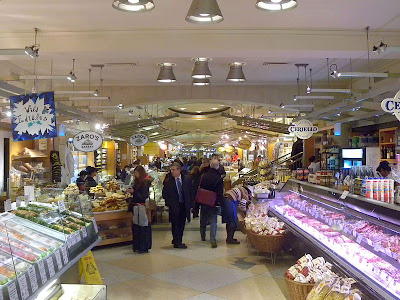
                                    Now, completely restored back to it's 1913 splendor, Grand Central has become a midtown destination with five exquisite restaurants and cocktail lounges, 35 casual international eateries in the lower level Dining Concourse, gourmet foods from the Grand Central Market, and 68 unique specialty shops throughout the concourses.  All this in addition to the trains.


Happy Birthday Grand Central.


                                       Grand Central has become an international example of a successful urban project that gave new life to an historic building which otherwise would have been discarded and destroyed.


Grand Central Station Main Concourse

Grand Central Food Market 


Grand Central Oyster Bar 


Jim Weaver
GolfWiz Blog
Senior Travel Editor 

Email: jweaver35@comcast.net

Friday, June 29, 2012

There’s Lots To Do in Southern Delaware, Rain or Shine


Best known for its great beaches, Southern Delaware has a great history as well.  So when its not a “beach day” there is a wealth of great things to explore here. 
 

                                               Guestroom at Bellmoor Inn in Rehobeth.

Located where Delaware Bay meets the Atlantic, it has a long and illustrious maritime history. Captain John Smith of the Jamestown Colony in Virginia explored and mapped the rivers Southern Delaware in 1608-09. Surveyors Mason and Dixon established the southern boundary of Delaware in 1764, the line that separated North from South during the Civil War. At the small stone marker you can stand with one foot in Maryland and the other in Delaware.  You can also visit a marker in Lewes, where the Dutch first landed in Delaware in 1629. 
 
The first state in the United States (by virtue of being the first to sign the U.S. Constitution in 1783) Delaware might never have been a separate state. Pennsylvania and Maryland both wanted the land, but in the end because it had been first settled by the Dutch it was granted separate statehood.
 
For more modern attractions, you can tour the historic Lightship “Overfalls” in Lewes.  Coastal waters could be treacherous and ships needed signal lights to guide them. Anchored lightships were used where light houses could not be built. Only 17 lightships remain of the 179 commissioned between 1820 and 1952. The Overfalls is one of very few open to the public.
 
In Bethany Beach, you can tour the Indian River Lifesaving Station built in 1876.  When ships ran a ground on coastal sand bars during storms and were sinking, the exceptionally brave men of the Lifesaving Service came to their aid.  Its a fascinating story that is little known. 
 
Nearby in Fenwick Island you’ll find the Discover Sea Shipwreck Museum.  This free museum is located on the upper floor of a souvenir shop, but don’t be fooled.  Its an excellent museum filled with millions of dollars worth of treasure and artifacts reclaimed from dozens of sunken ships off the Atlantic coast and in the Caribbean.  Many of the ancient sunken ships were Spanish vessels loaded with treasure from the “new world” headed back to Europe.
 
Even before the America entered World War II, there was much concern that Germany would
attack our Atlantic coast. In 1941, the military began building massive coastal fortifications.  Today, at Fort Miles Historic Area just north of Lewes you can visit one of these facilities built to defend the Philadelphia Ship Yards, oil refineries along the Delaware River, and Dupont chemical works from attack.  There is a massive artillery piece here with a 12 inch bore. Originally there were two, plus a number of smaller guns.  The big guns could fire a 275 pound payload up to 25 miles -- really big bang.
 
A gun barrel from the U.S.S. Missouri (the battleship where the peace treaty was signed ending the war with Japan) has been acquired recently. The Missouri was the last American battleship ever to be built and went into service in early 1945 just months before the treaty signing.  The gun barrel is 66 feet long and has a 16 inch bore.  It will be placed on a (yet to be built) outdoor mount for public display at Fort Miles. 
 
Southern Delaware also has some great food.  At Luca Restaurant in Millsboro they always use the freshest local ingredients in keeping with Italian tradition of following the rhythm of the seasons. The daily features are chosen from what is delivered fresh each morning.  Its pasta and bread are made fresh daily. Wines are hand picked by an Italian Master Sommelier, some specifically for Luca. It is an Italian wine experience like no other. Located in a former bank building, the vault at Luca has been converted to a private dining area that can seat up to six guests.
 
The difference is in the extra little touches at Nage Bistro in Rehoboth Beach. From the specially formulated cocktails to the handcrafted garnish on the bistro's chef-created sandwiches, entrees and desserts, everything is just a little bit better here.  Its a great meal at a reasonable cost.
 
The Bellmoor Inn & Spa offers upscale lodging in Rehoboth Beach, with a variety of luxury hotel features and special amenities. Its elegant, beachside accommodations are the ideal lodging option for family vacations or romantic weekend getaways.  Its centrally located near the best attractions, beaches, museums, entertainment, shopping, and dining. The Bellmoor the ideal hotel choice in Rehoboth Beach.
 
Southern Delaware has an abundance of ecotourism activities. There's everything from whale and dolphin watching to beach combing, nature walks, photo opportunities, canoeing, and bicycling. Part of the Atlantic Flyway, the area home to a variety of land and sea birds.  Other options include a choice of great beaches, camping, nature trails, boating, and fishing including surf, ocean, bay, and freshwater.
 
The cultural experiences are numerous here, including a summer arts festival, a winery, art galleries, dinner theater, historic train rides, outdoor performances by the ocean, and sounds an annual Nanticoke Indian Powwow, which draws native Indians for tribal dances from near and far.
 
Order your free Visitor's Guide at www.visitsoutherndelaware.com and begin enjoying Southern Delaware.
 
Photo Information ---
 Recovered artifacts on view at Shipwreck Museum.
 

                                      Overfalls Lightship is open to public in Lewes.


                                   12” Gun from WWII is on exhibit at Fort Miles
                                                     outside Lewes.


                                   Lifeboat at Rescue Service Museum at Bethney Beach.


                                              Bank Vault seating at LUCA Restaurant.
 
James Weaver
GolfWiz Blog
Senior Travel Editor

Friday, June 22, 2012

Golfing In Western Canada Offers Spectacular Views


Some of the most scenic views in the world are in the Canadian Rocky
Mountains.  Resorts here have the very best, plus lots of great golf.
See if you agree.

15th Hole, The Fairmont Banff Springs
:
This 479-yard par 4 is the original first hole of this historic course,
nestled against its famed Waldhaus Restaurant and pub.  The view
from the elevated tee includes a distant view of the valley, edged by
mountain cliffs and the Bow River


18th Hole, Stewart Creek Golf Club
The par-5, 520-yard finishing hole at Stewart Creek not only provides
one last crack at making birdie it also saves the golf course's best
view for last. The view may cause you to lose focus on the golf shot as
it provides a panoramic view of the 18th green, #9 green and Hole #1
with Cascade mountain providing the back drop.  Take a virtual tour
of the hole via Stewart Creek’s website.

                       
10th Hole, Canmore Golf & Curling Club:
The first and tenth holes are great opening holes running side by side,
featuring a large bunker between the approach of both holes.
  A 520-yard par-5 hole, the 10th is situated in the valley between
two towering mountain ranges.

                       
9th Hole, The Fairmont Jasper Park Lodge:  Known
as Cleopatra, this voluptuous par 3 measures 231 yards from the back
tees.  Any of the tees have an incredible view from a high elevated tee,
with a mesmerizing backdrop of Pyramid Mountain. Check out new
flyovers of the course from The Fairmont Jasper Park Lodge’s Website.

4th Hole, Mount Kidd Course:  This 197-yard par-3 hole
is Kananaskis Country’s most photographed hole.  The backdrop to your
tee shot is the impressive Mount Kidd to your left and directly in front
is Mount Lorette, the namesake for the other 18 holes at Kananaskis. 
To the right of the tee is the crystal clear, fast flowing Kananaskis
River and further right is the snow covered Mount Evan Thomas.

18th Hole, Silvertip Resort:  The
par-4 finishing hole sums up your Silvertip experience, with tees
sitting at the highest point on the golf course.  A dogleg-left
orientation drops dramatically to the Timbers Clubhouse below, allowing
both golfers and diners on the outdoor patio with a view of great golf
shots, the breathless Bow Valley and towering peaks of the Rocky
Mountains. An online webcam gives travelers a wide-angle view of
the hole each day.

Canadian Rockies Golf courses are easily accessible via Calgary
International Airport, with service by most major air carriers.
Learn more at www.canadianrockiesgolf.ca.


By Jim Weaver
GolfWiz Blog
Senior Travel Editor 

Wednesday, June 20, 2012

Berlin, Now 775 Years Old, Is An International Symbol For Peace and Unity


I went to Berlin hoping to learn how it has changed since the collapse of  Soviet controlled

East German government, the GDR, in 1989.While most visitors are simply looking for the
tourist sites, I was looking for something more.
 
Having visited Leipzig just days earlier, I had seen St. Nicholas Church near the city center and learned of the “Peaceful Revolution” of October 1989 inspired there. It resulted in  nonviolent demonstrations in Leipzig, in Berlin, and in other GDR cities and the collapse of the Soviet controlled government.  Berlin was a divided city for nearly 30 years and the Berlin Wall (the "Wall of Shame" according to former mayor Willy Brandt) had symbolized the "Iron Curtain" that separated the city and Germany.  Today, only a small section of the wall remains and its a graffiti art gallery.
 
The Berlin Wall Memorial is a stark reminder of the division of Germany.  Located next to the former border, there is a piece of the Berlin Wall next to the infamous border strip and watchtower. The facility shows how the border facilities were constructed and imparts to the visitor a lasting impression of the nation’s tragic division.  The Reconciliation Church was located at this site. It was blown up in 1985, as it stood right on the no man’s land “death strip”. After the fall of the Wall, a Chapel of Reconciliation was erected and opened in 2000.
Victims of the Wall (more than 1,100) are regularly remembered during church services.
There are also several other “Wall Memorials” in the city. 
 
The Memorial to the Murdered Jews of Europe, also known as the Holocaust Memorial, is located near the Brandenberg Gate. It consists of  nearly five acres covered with 2,711 concrete slabs or "stelae", arranged in a grid pattern on a sloping field. According to the architect, the stelae are designed to produce an uneasy, confusing atmosphere, and the whole sculpture aims to represent a supposedly ordered system that has lost touch with human reason.  An underground information center here has the names of all known Jewish Holocaust victims. 
 
The Jewish Museum Berlin, one of the finest (and most recognizable) examples of contemporary architecture in the city, was designed by Daniel Libeskind.  He has called it “Between the Lines”, a title that reflects the tensions of German-Jewish history.  The permanent collection extends over 2,000 years of German-Jewish history. 
 
Every Berliner over 40 years of age can remember the years when the city was divided
and the Soviet Union controlled East Berlin and East Germany.  The DDR Museum (GDR in English) here recalls life as it was for millions of Germans during the years of the Soviet regime.
Visitors can see a furnished apartment and a Soviet made car. The interactive exhibits demonstrate the many pressures and limitations that made up everyday life under Soviet rule.
 
The Brandenburg Gate, erected between 1788 and 1791, has been one of Berlin’s most important monuments for over two hundred years. A former symbol of the divided city, it drew visitors who would climb to an observation platform to glimpse of the world behind the Iron Curtain which separated East from West Berlin, geographically and politically.
 
I asked my guide what Berliners thought following reunification. “Initially everyone was very pleased,” he said. “Later, some from East Berlin missed the old system where most all of their needs were provided for, and some West Berliners complained strongly about the high cost of rebuilding East Berlin and East Germany.
 
Berlin has 170 museums (Museum Island in the Spree river alone is the site of five internationally significant museums) which makes it an impossible challenge to visit all.
However, American travelers will no doubt appreciate The Kennedys Museum and The Ramones Museum. President Jack Kennedy make a great impression on citizens when he visited here in 1963, at the height of the Cold War, and made his famous quote “Ich bin ein Berliner.”  The president and his family are remembered at this museum.  The Ramones were a punk rock band from New York City.  They had a 30 year career before retiring in 1996. The museum exhibits the impressive personal collection of artifacts from a Berlin fan.
 
Berlin is blessed with some of the world’s greatest architecture, both classic and contemporary.  One could spend weeks just
exploring architectural gems. 
 
The baroque-style Hohenzollern Palace, once the seat of German government was a landmark in the city since the 15th century, when the Prussian royal family began construction, until 1950, when the GDR decided the war-ruined palace was a reminder of a decadent old world and destroyed its remains.
 
In 1976, The Palast der Republik was built. It housed not just the East German parliament (largely a ceremonial body) but also a bowling alley, a disco, and other public space. In 1993, it was torn down because it was riddled with asbestos, but critics argue that asbestos problems in West Berlin were solved without demolishing buildings. They believe a remnant of Cold-War politics was behind its demolition and the neo-Hohenzollern palace construction project now in the works.
 
The question is when it might be finished. The due date is 2013, but its budget still has to make up an 80 million Euro shortfall in private (corporate) donations -- and 32 million Euro from the city of Berlin, which was deeply in debt even before the current financial crisis hit. For now the "Schlossplatz," or palace square, is empty, and not all of Berlin will mind if it stays that way.
 
I had hoped to see the new Berlin International Airport scheduled to open in June 2012, however, here to, construction delays have pushed the opening back a full year.  A good reason to return in 2013.  Berlin is a fascinating city and I hope to see more.
 
If you’re traveling to Berlin, you should consider staying at Indigo Hotel, a new boutique hotel
well located in the old East Berlin  www.hotelindigoberlin.com . Owned by the same folks who own Holiday Inn, it is very comfortable and has an excellent restaurant. When planning your trip view  www.visitberlin.de/en and  www.germany.travel.com.
 
 
The DDR Museum remembers life in Berlin as it was under Soviet control from 1945 to 1990.

The Berlin Wall and “No Man’s Land” strip (looking into East Berlin) as it was before the fall of the GDR regime.


 Brandenberg Gate was the dividing line between East and West Berlin for nearly 30 years.
 Holocaust Memorial remembers the millions of European Jews who died under Nazi rule.
  In 1989 Berliners demonstrate against the Wall and help bring down the Soviet backed government.
Olympic Stadium built by the Nazi government for the 1936 Games now fully restored was the site of the World Cup Soccer Championships in 2010.


James Weaver
GolfWiz Blog
Senior Travel Editor

Thursday, April 12, 2012

TIger Woods Announces Upcoming Schedule


Tiger Woods, after his disappointing play in the Masters, will make his next appearance May 3-6 in the Wells Fargo Championship at Quail Hollow Club in Charlotte, the tournament announced Wednesday.

Tiger Woods And His Actions At The 2012 Masters


In follow-up to the Masters golf tournament was my appearance on ESPN Outside The Lines (April 9, 2012 at 3:00 EST). I received lots of feedback. It's always good to hear the thoughts and opinions of others.

One Viewer emailed me to say: “So are you going to just defend Tiger no matter how immature he acts? Seems pretty racist to me. Bet if he wasn't African American you'd agree with everyone else who thinks he's a disgrace now.”


My response: Calling Tiger a "disgrace" is a bit too much in my opinion. His actions were not in the spirit and tradition of the game and he should have been able to maintain his composure regardless of how he was playing. But he didn't and he deserves to be chastised and called on it.
But what I feel is disgraceful is the double standard some fans have with Tiger Woods. They love the fiery competitive attitude and energy he brings to the game, but they criticize any and every slip-up or mistake he makes.
Let's not forget who makes the needle move in the world of golf. Like it or not, Tiger Woods is the face of professional golf regardless of how he is playing. Four shots ahead, or seven shots back, the cameras and fans want to watch Tiger play. He makes money for everyone in the game.

Due to the fact that he is so popular the cameras and microphones are always on him and they seem to capture his every move: good and bad. I am 100% sure that if other touring pros had the same exposure you would see some slammed clubs and hear some off-color comments when they hit poor shots too. But who cares about the guys who aren't in contention?

Henrik Stenson slammed his club and dropped a few choice words during the Masters this year after hitting a poor shot on the 18th hole Friday, but where is the article about him being a disgrace to the game? I guess when the Henrik Stenson 2013 golf game is released we might read something about that incident. But hold on; He doesn't have a video game named after him.

Your comment about me being a racist is almost laughable. I write and say what I believe in my heart and regardless of the color of the person I am commenting on. I keep it as real as possible. You, if you think I have this undying devotion to Tiger because I am Black, remember Tiger refused to say he was Black, and not everyone in the Black community loves him. I realize that may come as a shock to you. But, yes, some Black people don't like Tiger Woods.

When you use the word disgrace remember players like Tommy Bolt—the famous club thrower— and John Daly who not only disgraced the game but himself, countless times on and off the course. I work with words and I choose them wisely. If Tiger Woods is such a disgrace to the game, do us all a favor and don't watch him play anymore.

Let me know your thoughts on this. Fine me at www.EdWanambwa.com or friend me on Facebook.

Edward S. Wanambwa

Stonington, Maine: A Vacation Away From The Tourist Crowds


My wife and I first discovered Deer Isle, Maine,about twenty five years ago.  I had friends who recommended it and we were interested in experiencing the “real” Maine, not the “tourist” Maine.  We drove most of two days from Philadelphia staying overnight along the way.  When we reached Portland, we thought we were almost there. When we reached Elsworth, we were certain it was close by, but it was still an hour’s drive before we crossed the high green bridge to the island and another 30 minutes before we reached Stonington the largest community at the southern most tip of Deer Isle. You might say it’s “off the beaten path.”
 
Nevertheless, Stonington is a charming little town with much to offer visitors and permanent residents. Deer Isle is home to 2,500 people year-round and the number more than doubles in the summer.  The 28 mile-long island was once a major center for quarrying granite (some is still done) and many of New York City’s early skyscrapers and the Brooklyn Bridge are of stone from Deer Isle.  Lobster fishing is now the main business here and like much of rural Maine people often have more than one job. 

Stonington’s block long main street, next to the harbor, has a food market at one end and the century old Opera House at the other (now an arts center and movie theater).  There are a couple of restaurants, a hardware store, several art galleries, an antique shop, two small motels, and a real estate office.  Summer rentals are big on the island. Our favorite restaurant is Fisherman’s Friend where they serve a delicious lobster stew.  Lots of lobster without all the work.  Its wild blueberry pie is the best I’ve ever eaten.  

But its hard to beat Eaton’s Pier at the north end of Little Deer Isle (there are actually two islands connected by a twisting causeway).  They unload some of the lobster catch from boats here and will boil them for you in 50 gallon steel barrels with propane burners.  You eat them at wooden picnic tables on the dock.  There are no fancy tools to help you get to the lobster meat, just some grapefruit size rocks to crack the shells. A roll of paper towels helps keep you neat. Nothing fancy, just great taste.

Every Christmas we buy fresh pine wreaths (handmade by Deer Isle women) for family and friends from Harbor Farm, a lovely retail business on the island.  See www. harborfarm.com  Also see Nervous Nellie’s Jams & Jellies at www.nervousnellies.com and help support the local economy.

We were on Deer Isle over the July 4th and got to see the holiday parade at the island’s other
little community Deer IsleVillage.  It’s less than half the size of Stonington and has two streets each about a block long.  The parade begins at the fire house and marches to the point where the streets intersect and makes a left turn. In another hundred yards, it turns around and heads back to the fire house. You see the whole parade twice, but don’t be late for its over in about ten minutes. 

The parade “Band” a ragtag group of various musical instruments and ages does not march, but sits at intersection of the two streets so the music can be heard the full length of the march. There were fire trucks, kids with decorated bikes, scout troops, and old veterans.  The Haystack School of Crafts here attracts artists from across the country each summer and they always take part in the parade.  This year a dozen artists were dressed as giant misquotes in handmade costumes.  It was a big summer for pesky insects and the small crowd of spectators laughed and cheered loudly.

Haystack is one of the treasures on Deer Isle.  Although its only open to the public for its
craft auctions, which occur in the evenings near the end of each two week workshop session, its well worth visiting. Fine crafts (in various craft media) from workshop participants and faculty are auctioned off to benefit the scholarship program.  There are many excellent bargains to be had by craft enthusiasts and lots of fun for all.

Back in Stonington, a popular activity is taking the mail boat to Isle of Haut, a few miles away.
A portion of the Isle is now part of Arcadia National Park and great for nature walks, bird watching, and hiking.  There’s a lovely inn on the island where you can enjoy a delicious meal, but don’t miss the mail boat back to Stonington or you’ll be an overnight guest.

There is golfing near Stonington at the Island Country Club.  Rental clubs are available at this
nine hole, 2,400 yard, par 34 course, open to the public.  Stay on the fairway, however, since the rough is pretty much impossible to navigate.  Tee times are first come, first served.

Near Fisherman’s Friend Restaurant is a sandlotball field where locals of all ages play
ball.  After dinner one evening we watched a pickup game of young kids (both boys and girls of various ages and skill levels, who shared ball gloves playing field) who were too few for full teams.  It was a delightful throwback to the past and a reminder of my own youth.

Deer Isle has a new high school and each Spring graduating seniors (about two dozen) paint the first names of their classmates on foot long pieces of wood and nail them to the telephone poles along the road into town.  No need for last names, everyone here knows who they are.  Its like that in Stonington, Maine. 


James Weaver
GolfWiz Blog
Senior Travel Editor 

Quebec City: A Little Bit of Paris in Nearby Canada


No place in Canada (or North America) is more like Europe than Quebec City, Quebec.  While French is the official language, nearly everyone is bilingual and American`` English is widely spoken.  Both languages are taught in the schools.  But its more than just language, its the culture -- the architecture, the gardens and fountains, the public art, the hospitality, the charm, and the food (especially the food).  Like Paris, there are small cafes and bistros that offer tasty croissants and other fine pastries. Virtually every one has tables on the sidewalks where you can sit and enjoy your espresso while you observe the passing scene.  Very Parisian.
 
We were fortunate to have the opportunity to dine at one of the city’s leading French bistro restaurants  l’Echaude www.echaude.com/en Our opening course was a wild mushroom soup followed by entrees of calves liver and duck confit.  The food and service were both suburb.  It was raining when we left, but fortunately our hotel the Auberge St. Pierre www.auberge.qc.ca/en was only steps away.  A fine establishment in the European tradition with a great location, we enjoyed our stay.
 
The business center of the Old City is a very walkable area and has numerous art galleries, antique shops, fashion boutiques, book stores, jewelers, chocolatiers, and other welcoming shops. Near the center is a impressive bronze statue of Samuel de Champlain (1567-1635), "The Father of New France", a French navigator, cartographer, soldier, and explorer. He founded New France and Quebec City on July 3, 1608 (12 years before the Plymouth Colony and a year after the first Jamestown Settlement).  Nearby, there’s a colorful three story high mural on the exterior wall of a building that depicts the history of Quebec from its founding to modern times.
 
The city is built on two levels.  The Old City, the place most visited  by tourists, is below a high cliff and closest to the river. There are seven stairways to the Upper City and an annual contest where runners race up and down all seven.  Fortunately, there is also a tramway connecting the two sections of the city and several streets.
 
The British tried to oust the French from Quebec  in 1690 but failed. When the envoys delivered the terms of surrender, the Governor General famously rebuffed the British declaring "I have no reply to make to your general other than from the mouth of my cannons and muskets."  However, the British return in 1759, and following a three month sedge, defeated the French in 15 minutes in surprise attack at the famous Battle of the Plains of Abraham. It lead to the creation of Canada.  You can visit the battlefield, now a beautiful park.  In 1775, American colonial troops (under the command of Benedict Arnold) tried to drive the British out, but they too were defeated.
 
Quebec City is the Provincial Capital, the seat of government for Quebec.  The impressive Parliament Building was completed in 1886. Its Second Empire architectural style was popular for prestigious buildings at the time both in Europe and America. It resembles Philadelphia City Hall somewhat, another Second Empire building.  In front of the building is a beautiful fountain, reminiscent of Paris, donated to the city by a local department store owner a decade ago.  Across the front of the building are a number of bronze statures of prominent Quebec leaders from the past.  Throughout the city there are many fine examples of public art (think Paris).
 
The Fairmont Le Chateau Frontenac is a luxury hotel in the Upper City that dominates the skyline. It was one of a series of "chateau" style hotels built for the Canadian Pacific Railway to encourage luxury tourism and attract wealthy travelers to its trains. The hotel is near the Dufferin Terrace, a walkway along the edge of the cliff, offering extraordinary views of the Saint Lawrence River.
 
A major attraction, just east of the city, are the Monmorency Falls.  The falls are 275 feet high (98 feet higher than Niagara Falls) and 150 feet wide.  They are located  at the mouth of the Montmorency River where it drops over a cliff and enters the Saint Lawrence River opposite Orleans Island. The falls were named for Henri Montmorency, who served as viceroy (governor) of New France from 1620 until 1625.
 
There are staircases that allow visitors to view the falls from several different vantage points. A suspension bridge over the crest of falls provides access to both sides as well as a spectacular view. There is also an aerial tram that carries passengers between the base and the top of the falls. Each summer an international fireworks competition is held here with the falls as a backdrop.  In the winter, mist from the falls freezes creating spectacular piles of ice that
a few adventurous people scale for sport.
 
Orleans Island, located between two channels of the Saint Lawrence River east of the city was the site of the first settlements.  The island retained its traditional rural way of life until 1935, when construction was completed on the two lane bridge connecting it to the mainland. In spite of this, the island has maintained its pastoral image and historic character, with more than 600 buildings classified or recognized as heritage properties. In 1970, the entire island was designated a National Historic District. Today the island is a mix of year-round and vacation homes and farms. It is a popular destination for day trippers and bicyclists.
 
Orleans Island, known as the "Garden of Quebec", is still an essentially rural place famous locally for its produce, especially strawberries, apples, potatoes and wine. Sugar maple outlets offer maple syrup and other sweet products.
We visited the Bilodeau Apple Orchard and enjoy its delicious sparking “ice cider” made from apples frozen before they are picked.  The island attracts more than 600,000 visitors each year to its numerous bed-and-breakfast inns, regional cuisine restaurants, roadside fruit stands, art galleries and craft shops.
 
For further information on Quebec City view
www.quebucregion.com

James Weaver
GolfWiz Blog
Senior Travel Editor 


About Me

Followers